

Preparations for a Future Self
Who doesn't exist until they do, edited for then-current use

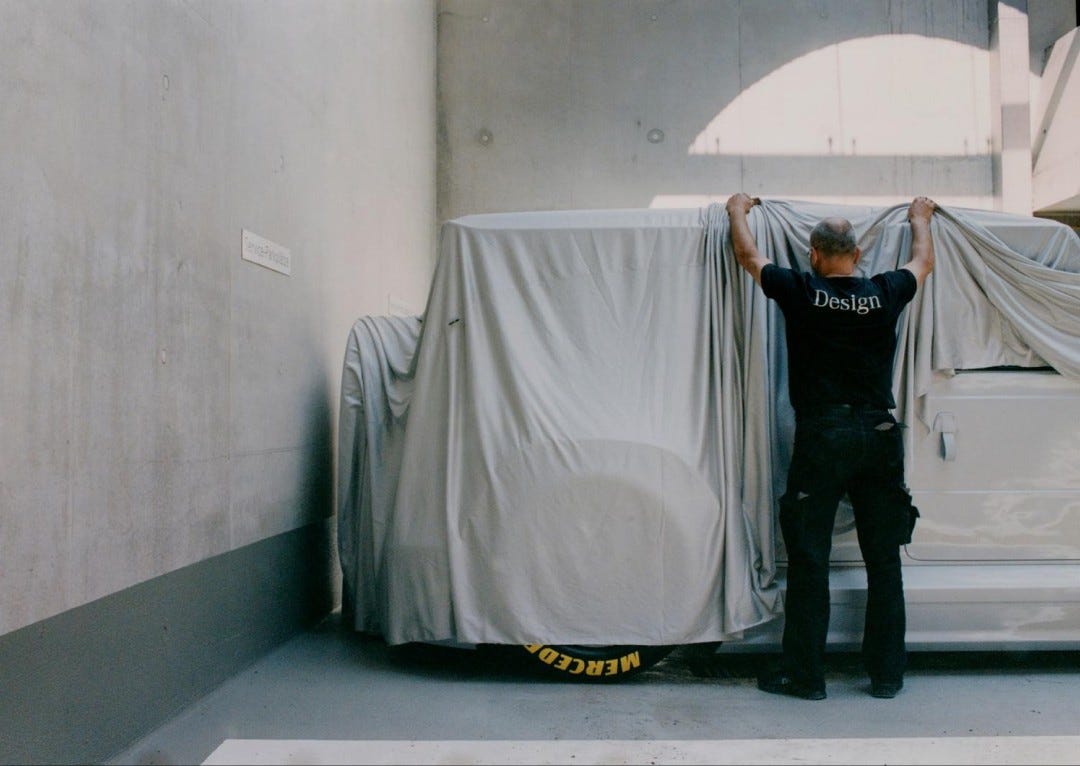
As I write this, I am finding myself aware of the distance between the words preparation and reparation. Again, as usual, my mind is looking for a path from something ordinary—to prepare or arrange—to something ridden with guilt—to repair a wrongdoing.
I think the relationship must have something to do with readiness.
Am I ready for what is to come in the new year? Will I have to adjust?
Am I organized ahead of time, in case something goes awry?
Do I have everything arranged? Do I not?
These questions, I think, are ones that follow us no matter where we find ourselves in life: as we face down tasks and shifts, movement and change. This is the unending human desire for resolve, for us to have enough preparedness to not have to make reparations1 (but knowing that we might, because to be human is to move forward and make our plans, do our things, and then…double back, fix them, do them again in some kind of altered fashion that says I did it and it was the best I could do).
Stay with me: I post a decent amount about what I read online and sometimes I am met with the startling (really, laughable) experience of someone IRL saying: “but do you actually read all those books?”
Thinking of this in the context of preparedness and reparations: There’s being ready for the world—posting about the books in the interest of having a conversation about them—and then there’s whether or not you owe the world any kind of asterisk later (*yes I do read those books or *sometimes, no, I don’t finish them). What I love about the latter is how human it also is, this idea that yes, I read a lot but also I am discerning and don’t read what I don’t feel I can finish or I got busy or something else was more interesting to me or I read as much as I needed to at the time.
Recently, The New Yorker came out with a piece on performative reading and I suddenly understood the different set of constraints I was working with when it came to this question. Perhaps people thought I was performing. The author wrote of a distance between sincerity and authenticity on the internet, and our inability to conceive of online experiences beyond their performative nature. It makes me think of that rudimentary drawing of the iceberg illusion: that to only see the tip and read it as success is to see just a percentage of the whole thing.
When someone thinks of preparedness or being prepared, is there a misconception of how complete that experience is? I mean, I can say that I am prepared for the new year, but there is a grey area that remains within every experience. There are always reparations to be made since nothing is truly perfect or complete from the get-go. Everything is perception and comfort. Most everything is also some kind of performance, authentic or not.
Preparedness for what life has in store is overrated. Preparedness thinks it has all the information, and that in having all the information, we will be immune to having to revisit or re-evaluate. It is a performance of future ability, but not future’s ability, which really is the true test. The future knows what we don’t. We’re just performing ideas of what we think it will be until we get there.
Preparations. It makes up almost the whole word. The p is just an attempt at foresight before the whole concept slips into a back-step.
When someone asks me if I’ve “read all those books” or if it’s “just for the pictures”, I don’t really care if they think I do or not. The question likely has more to do with their perception of themselves. But what it does make me consider is the cycle of preparing, performing, repairing that has to be done in all contexts, real and “not real” (as some people think being online is). There is an inevitable loop to preparing for anything. We are never owed anything by our preparations, not even if we have photographic evidence.
Today I edited a spreadsheet I use daily, gave it a facelift: new column titles, new year category. Every day, I update this spreadsheet and think I am doing myself better for being prepared. Thinking the future me and the now me have coalesced and I am all around good. But I think what I might be doing, more than anything, is repairing it, patching it together, day by day, to a level of satisfaction that I can be comfortable with for a moment. There really are only reparations, and they, too, live endlessly in the loop.

“I will clamber through the clouds and exist.”
- John Keats, in a letter to Benjamin Robert Haydon
I should acknowledge that the term “reparations” may draw up sensitive images or historical events for some and clarify that I am using the dictionary definition of the term.